Golf in Portugal: The Complete Guide for Luxury Travel Advisors (Regions, Courses & Planning)
Golf in Portugal: why it sells (and why it delivers well)
For luxury travel advisors, the best golf itineraries feel effortless. That “effortless” experience rarely happens by accident. It’s the result of tight sequencing, short transfer logic, and realistic pacing.
Portugal is uniquely strong on all three. The destination is not only award-backed, but it’s also operationally mature: record demand (2.17M rounds in 2024), a heavily international golf audience (85% of rounds played by foreign visitors), and a travel profile built for longer stays (average ~7 nights).
And here’s the detail you can use in proposals: 74% of golf tourist spend goes to non-golf activities, such as accommodation, dining, transport, and experiences. In other words: golf is the anchor, but the lifestyle is the profit and the memory.

Portugal’s seven golf regions (and who each one fits best)
1) Algarve
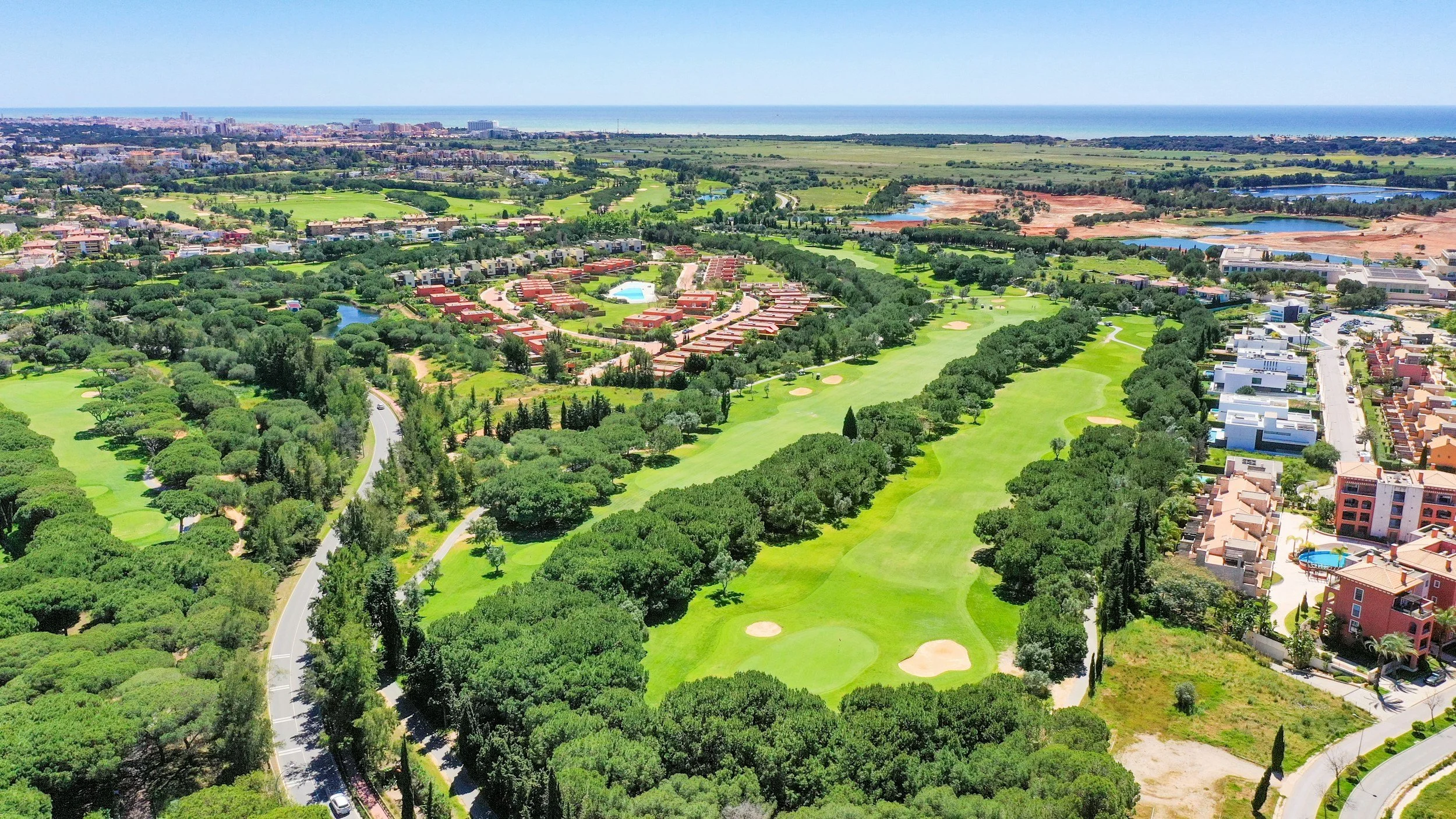
If you want the most reliable delivery, Algarve is the easiest base. The region dominates Portugal’s golf footprint with 40+ courses and 62% of all rounds.
That density matters in luxury travel because it creates redundancy and more options if you need to adjust tee times, weather, or group pacing.
Algarve also supports year-round playability: the brief notes 300+ sunshine days and average winter temperatures of 15–19°C. When a client says, “We want warmth in January, with no drama,” the Algarve is your cleanest answer.
2) Lisbon Coast (Cascais / Sintra)
Lisbon is where you build the “city + coastline + one standout round” proposal. It’s also where you can confidently sell a golf experience without turning the trip into a golf-only itinerary.
Two anchors matter for credibility:
Oitavos Dunes is cited as the only Portuguese course in Golf Magazine’s World Top 100 (#55).
Penha Longa (now a Ritz-Carlton) offers 27 Robert Trent Jones Jr. holes in the Sintra Mountains. Ideal for clients who want lush scenery and a resort-level feel near the capital.
3) Comporta / Alentejo Coast
Comporta is not volume golf. It’s the contemporary chapter: quieter, design-led, nature-forward, and ideal for clients who value discretion. The headline is Terras da Comporta: Dunas Course (David McLay Kidd, 2023), which the brief says “rocketed to #1 in Portugal” and won both World’s Best Golf Course and Europe’s Best Golf Course at the 2024 World Golf Awards.
If Algarve is the efficient base, Comporta is the differentiator that protects margin and stops the trip from feeling “generic.”
4) Silver Coast (Óbidos area)
Silver Coast gives you coastal wow-factor with a slightly calmer pricing posture than some peak Algarve corridors. The brief flags three standout courses north of Lisbon: West Cliffs (Cynthia Dye, 2017), Praia D’El Rey, and Royal Óbidos (Seve Ballesteros design).
For advisors, this is a smart region to propose when clients want coastal golf, great hotels, and a less “resort-heavy” feel.
5) Porto & Northern Portugal
The north is your answer for clients who’ve “done the classics.” It supports storytelling around heritage and landscape: the brief mentions Oporto Golf Club (founded 1890) and Estela Golf Club set across Atlantic dunes.
Pairing Porto, Douro, and a curated round or two can become a high-value add-on to a Portugal itinerary that isn’t positioned as a golf trip at all.
6) Madeira
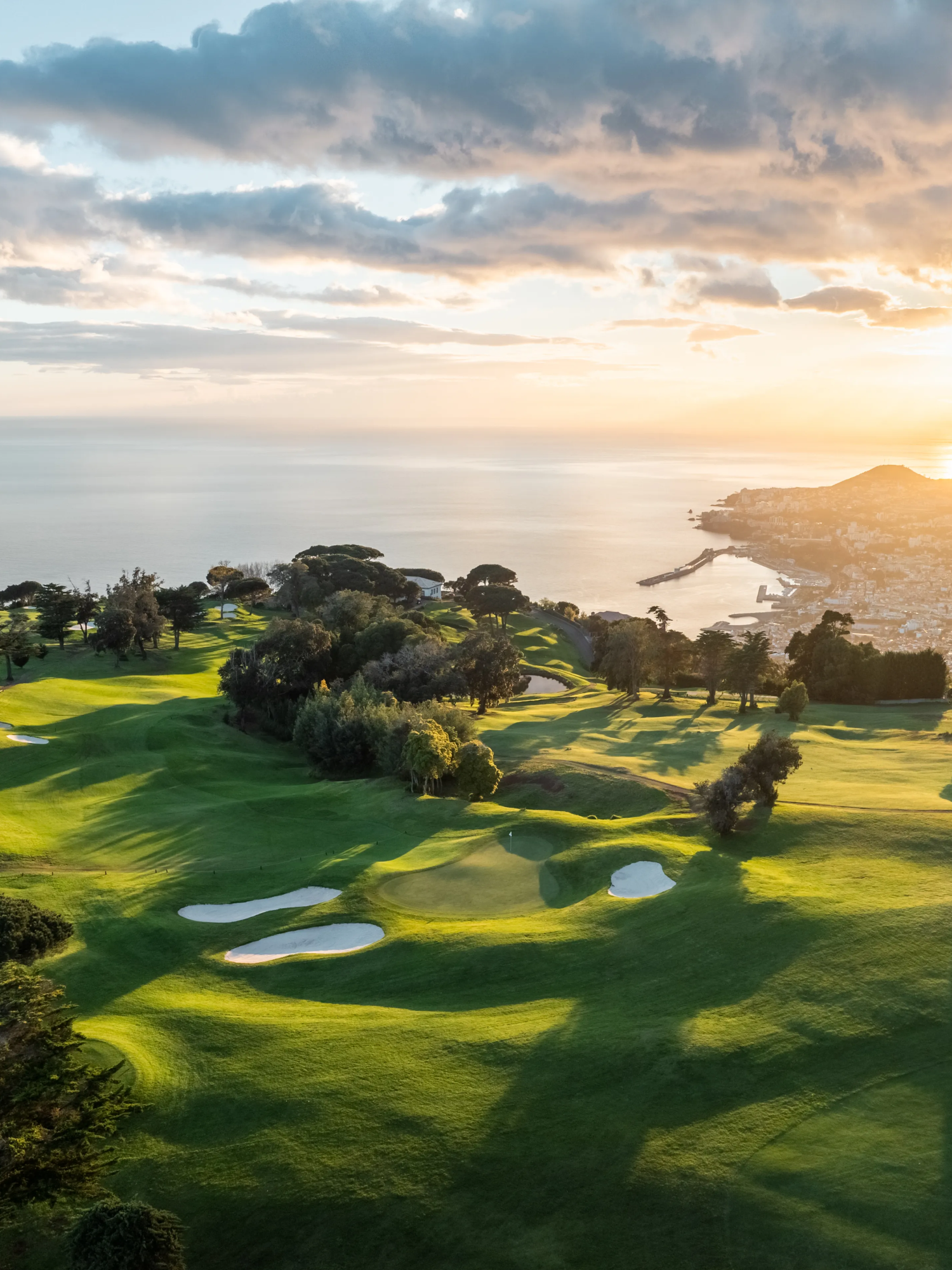
Madeira earned World’s Best Emerging Golf Destination in 2024 and 2025, anchored by Santo da Serra.
This is ideal for winter clients who prefer island energy (and it’s a strong alternative pitch when clients have already done mainland Portugal).
7) Azores
For highly seasoned travelers, the Azores offer a distinct “volcanic, subtropical niche,” with Furnas Golf Club on São Miguel noted in the brief.
This isn’t your default; it’s your “rare Portugal” proposition.
Green fees & seasonality: what high-end clients should expect
Portugal’s pricing follows an “inverted” pattern compared to beach tourism: highest in spring and autumn, lowest in summer and winter.
Premium green fees are cited at €135–275 in high season and €100–175 in low season (with quality mid-range and value tiers below).
The peak green-fee months are explicitly called out as April–May and October, while the cheapest play is generally December–February and July–August (when heat suppresses demand).
How to say this in a luxury way (without sounding salesy):
You don’t need to lead with price. Lead with availability strategy. In peak months, your client is buying access and timing. Off-peak, they’re buying value without downgrading hotels.
The luxury planning framework (what makes the itinerary feel premium)
1) Pacing
Most luxury clients do best with one round per day, and many do better with built-in recovery time. The brief’s tourism profile supports this: average stays are about 7 nights, and most spending is “beyond golf.”
The point isn’t to maximize rounds, it’s to maximize satisfaction and maintain energy across the trip.
2) Transfer realism
Clients remember the drive more than the score. A premium trip should feel calm, not logistical. That’s why region selection matters: Algarve’s density makes everything easier; Lisbon Coast + Comporta works beautifully when you keep the transitions clean.
3) Non-golfer program as a core product
Because 74% of golf tourist spend is non-golf, you should plan companion programming as if it’s the main itinerary: wine, dining, coastline, wellness, culture.
This is where Portugal outperforms destinations that are “golf-first, everything-else-later.”
Work with PTC! Send your brief and we’ll return a client-ready itinerary flow under your brand!